Groundbreaking Comfort with Local Geothermal HVAC Experts
Why Homeowners Are Searching for Geothermal HVAC Near Me
Geothermal HVAC near me is one of the smartest searches a Salt Lake City homeowner can make. If you want lower energy bills, reliable year-round comfort, and a system that lasts decades, geothermal heating and cooling delivers on all three.
Here’s what to know right away:
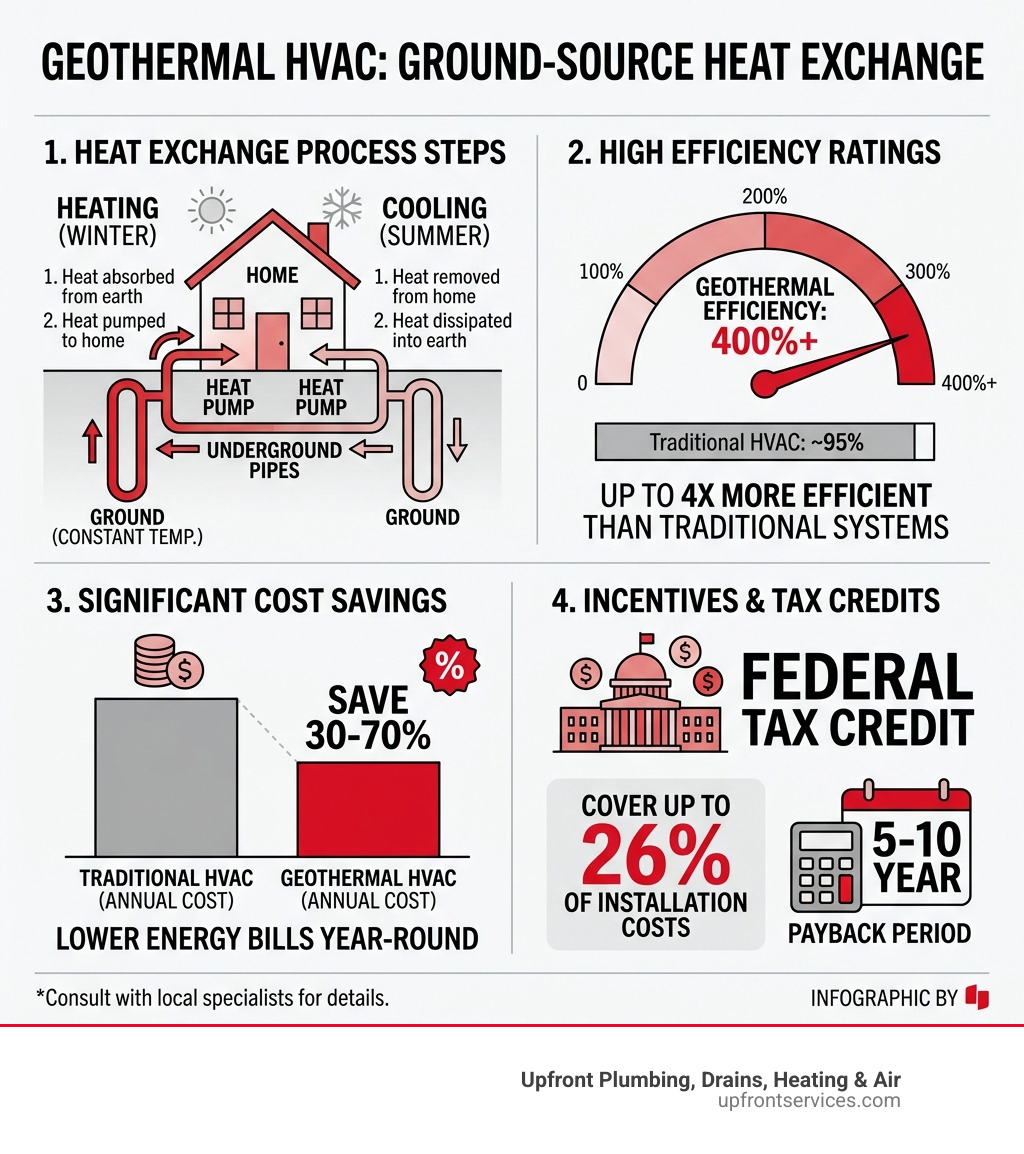
- Geothermal systems are 4x more efficient than traditional HVAC
- They can cut heating and cooling costs by 30–70%
- Federal tax credits cover up to 26% of installation costs
- Systems pay for themselves in 5–10 years
- Underground loops last 50+ years; heat pumps last 15–25 years
- They work in nearly any climate, including Utah’s hot summers and cold winters
Finding a qualified local installer is the key first step — and that’s exactly what this guide helps you do.
I’m Ryan Jonas, a results-driven management and process improvement specialist with experience helping homeowners navigate cost-effective solutions — including evaluating geothermal HVAC near me options that deliver real, lasting value. In this guide, I’ll walk you through everything you need to make a confident decision for your home.
What is Geothermal HVAC and How Does It Work?
To understand why so many people are looking for geothermal hvac near me, we first have to look beneath our feet. While air temperatures in Utah can swing from a blistering 100°F in July to a bone-chilling 10°F in January, the temperature of the earth just a few feet below the surface remains remarkably stable—usually between 45°F and 55°F year-round.
A geothermal system, also known as a ground-source heat pump, leverages this constant temperature to provide Heating & Air for your home. Unlike a traditional furnace that burns fuel to create heat, or an air conditioner that fights against hot outdoor air to cool your house, a geothermal system simply moves heat from one place to another.
The process relies on three main components:
- The Ground Loop: A series of durable pipes buried in the earth.
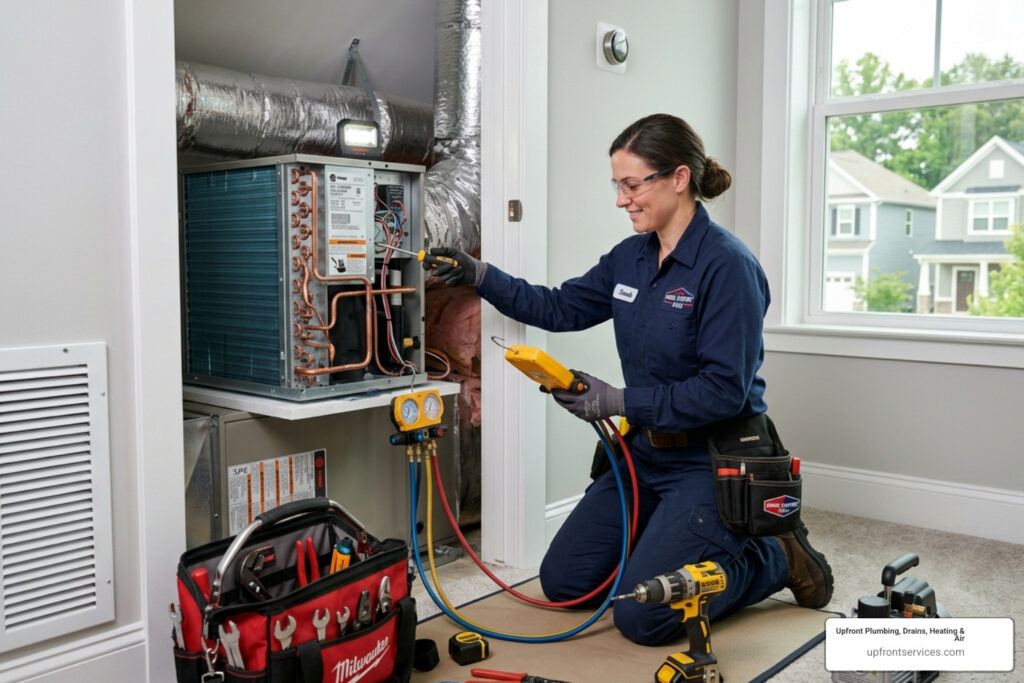
- The Heat Pump: An indoor unit that houses the compressor and heat exchanger.
- The Distribution System: Your home’s ductwork or radiant flooring.
In the winter, a water-based solution circulates through the ground loops, absorbing thermal energy from the earth. The heat pump then concentrates this energy and releases it into your home. In the summer, the process reverses. The system pulls heat out of your house and “deposits” it back into the cool earth. It is a continuous, elegant cycle of renewable energy that provides incredible comfort without the fluctuations seen in wind or solar power.
Common Types of Geothermal Loop Systems
When you start planning an installation with a specialist in geothermal hvac near me, the first thing we look at is your property. The “loop” is the heart of the system, and there are several ways to configure it:
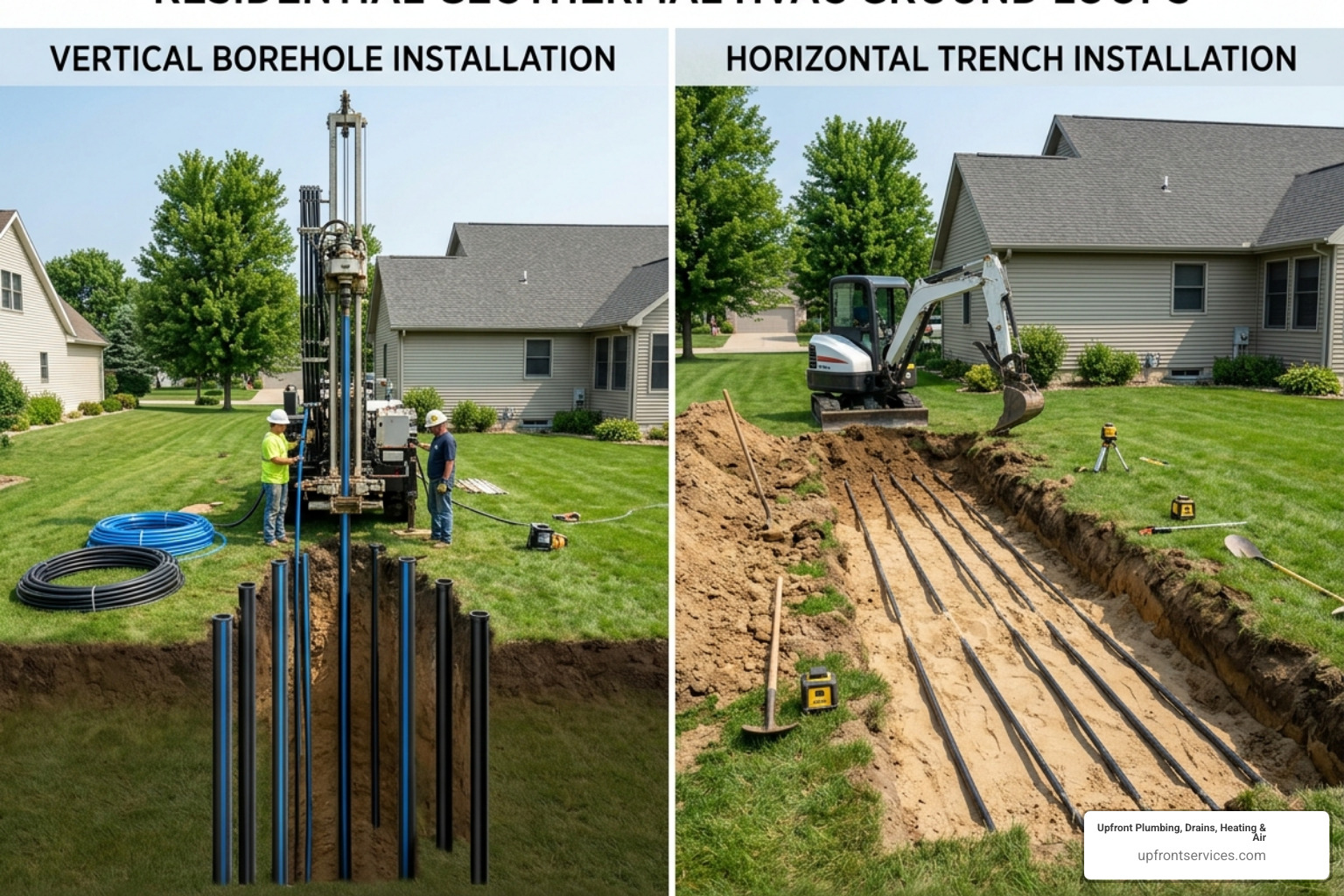
- Horizontal Loops: These are common for residential properties with plenty of acreage. We dig trenches about four to six feet deep and lay the pipes flat. It’s often the most cost-effective installation method if space allows.
- Vertical Boreholes: This is the “groundbreaking” solution for most Salt Lake City suburban lots. We drill deep holes (typically 100 to 400 feet deep) and insert the loops vertically. This requires very little surface area—sometimes just two boreholes spaced ten feet apart are enough for an entire home.
- Pond and Lake Loops: If you have a sufficiently deep body of water on your property, we can coil the pipes and sink them to the bottom. This is incredibly efficient because water transfers heat even better than soil.
- Open-Loop Systems: These use well water directly as the heat exchange fluid. The water is pumped up, run through the heat pump, and then discharged back into a separate well or surface water source.
The Benefits of Choosing Geothermal HVAC Near Me
Why go through the effort of digging up the yard? Because the benefits are staggering. Traditional HVAC systems are limited by the laws of thermodynamics; even a high-efficiency gas furnace only converts about 95% of its fuel into heat. Geothermal systems, however, achieve 300% to 600% efficiency. This is possible because they aren’t creating heat; they are just moving it.
Beyond the numbers, you get a system that provides whisper-quiet Air Conditioning and heating. Since the heavy lifting happens underground and the indoor unit doesn’t have a loud outdoor fan, you’ll barely know it’s running. Plus, because the system doesn’t burn fossil fuels, there are zero direct emissions – making it the cleanest way to keep your family comfortable.
Unmatched Efficiency and Long-Term Savings
The most immediate impact of searching for geothermal hvac near me is felt in your wallet. Homeowners in the Intermountain West often see a 30% to 70% reduction in their monthly utility bills. On average, this translates to annual savings of anywhere from $400 to $1,500.
| Feature | Traditional HVAC | Geothermal HVAC |
|---|---|---|
| Efficiency Rating | 80% – 95% | 300% – 600% |
| Energy Source | Gas / Electricity | Renewable Earth Heat |
| Lifespan (Indoor) | 10 – 15 Years | 20 – 25 Years |
| Lifespan (Loop) | N/A | 50+ Years |
| Monthly Savings | Baseline | 30% – 70% Lower |
While the upfront cost is higher, the “payback period” – the time it takes for energy savings to cover the extra cost of the system – is typically just 5 to 10 years. After that, the system is essentially putting money back into your pocket every month.
Environmental Impact of Geothermal HVAC Near Me
If you are looking to reduce your carbon footprint, geothermal is the “gold standard.” These systems reduce a home’s carbon footprint by up to 75%. By eliminating the need for natural gas or heating oil, you are removing a major source of indoor air pollution and outdoor emissions. We follow strict EPA guidelines for all installations to ensure that your transition to renewable energy is as green as the technology itself.
Installation Costs, Financing, and Tax Credits
Let’s talk numbers. A typical residential installation for geothermal hvac near me generally ranges from $18,000 to $40,000. We know that looks like a big number compared to a standard $8,000 furnace and AC combo. However, you have to look at the “net” cost.
The federal government currently offers a significant Geothermal Tax Credit. This allows you to deduct 26% of the total installation cost (including labor and drilling) directly from your federal taxes. For a $30,000 system, that is a $7,800 discount right off the top. When you add in local utility rebates available in many Utah service areas, the price gap starts to shrink rapidly.
If you are building a new home in areas like Draper or Park City, geothermal is even more attractive. You can often roll the installation cost into your mortgage. The monthly increase in your mortgage payment is frequently less than the monthly savings on your utility bill, meaning the system is “cash-flow positive” from day one. If you’re replacing an old unit, HVAC Replacement with geothermal is a long-term investment in your home’s equity.
Factors Affecting Your Geothermal HVAC Near Me Quote
No two yards are the same, and several factors will influence your final estimate:
- Soil Conductivity: Rockier soil in the benches may require different drilling techniques than the softer soil in the valley.
- Home Square Footage: A 5,000 sq. ft. home in Sandy will require more loop length and a larger heat pump than a 1,500 sq. ft. bungalow in Sugar House.
- Drilling Depth: The deeper we have to go to find stable temperatures or clear obstacles, the higher the drilling cost (which can range from $5 to $40 per foot).
- Ductwork: If your existing ducts are sized for a traditional system, they may need minor modifications to handle the airflow of a high-efficiency heat pump.
Maintenance and Lifespan of Geothermal Systems
One of the best things about geothermal is that it is incredibly low-maintenance. Because the heat pump is located indoors, it isn’t exposed to Utah’s harsh snow, rain, or baking sun. This allows the indoor components to last 20 to 25 years, nearly double the lifespan of a standard air conditioner.
The underground loops are even more impressive. Made of high-density polyethylene, they are virtually indestructible and are rated to last 50 years or more. Once they are in the ground, you won’t have to think about them again for the rest of your life.
However, “low maintenance” doesn’t mean “no maintenance.” To protect your investment, we recommend annual HVAC Maintenance to keep things running at peak performance.
During a typical service visit, our technicians will:
- Check Antifreeze Levels: Ensuring the fluid in the loops is at the correct concentration to prevent freezing and optimize heat transfer.
- Clean Heat Exchangers: Removing any scale or debris that could slow down the system.
- Inspect Loop Connections: Checking for any signs of pressure loss or leaks.
- Filter Changes: Just like a regular furnace, keeping air filters clean is vital for indoor air quality.
Frequently Asked Questions about Geothermal HVAC
Is geothermal suitable for my home’s location and climate?
Absolutely. In fact, Utah’s climate makes it an ideal candidate for geothermal. Because our air temperatures are so extreme, traditional air-source heat pumps often struggle when it gets below 30°F. Geothermal doesn’t care what the air temperature is; it’s pulling heat from the 50°F ground. Whether you are in the high-altitude cold of Park City or the summer heat of West Valley City, the earth provides a stable, reliable energy source every single day.
What are the signs I need to replace my system with geothermal?
If you find yourself constantly calling for HVAC Repair, it might be time to stop patching the past and start investing in the future. Look for these signs:
- Rising Energy Bills: If your bills are climbing despite no change in usage, your old system is losing its fight against the elements.
- Frequent Repairs: If you’ve spent more than $1,000 on repairs in the last two years, that money could have been a down payment on a geothermal system.
- System Age: If your furnace or AC is over 12-15 years old, it is likely nearing the end of its reliable life.
- Excessive Condensation or Noise: These are signs of mechanical stress that often lead to total system failure.
How do I find a reliable geothermal contractor?
Geothermal is a specialized field. You shouldn’t hire just any “guy with a van.” When looking for geothermal hvac near me, look for:
- Experience: We have over 25 years of experience in the industry and understand the unique geology of the Salt Lake Valley.
- Certifications: Look for NATE-certified technicians who have specific training in ground-source heat pump technology.
- Upfront Pricing: Geothermal is a big investment. You deserve to know exactly what it will cost without hidden fees or “surprises” halfway through the drilling process.
- Warranties: A company that stands behind its work will offer unmatched warranties to give you peace of mind for decades to come.
Conclusion
Switching to geothermal is about more than just “buying a new heater.” It’s about taking control of your home’s energy future, protecting the environment, and ensuring your family stays comfortable regardless of what the Utah weather throws at us.
At Upfront Plumbing, Drains, Heating & Air, we specialize in bringing this groundbreaking technology to homeowners across the Salt Lake City metro area—from Ogden down to Provo and up into Park City. We pride ourselves on honest, upfront pricing and quality work that stands the test of time. If you’re tired of high utility bills and unreliable comfort, it’s time to see what’s possible right beneath your feet.
Ready to see if your property is a candidate for the most efficient HVAC system on the planet? Schedule your geothermal consultation today and let us help you achieve groundbreaking comfort.