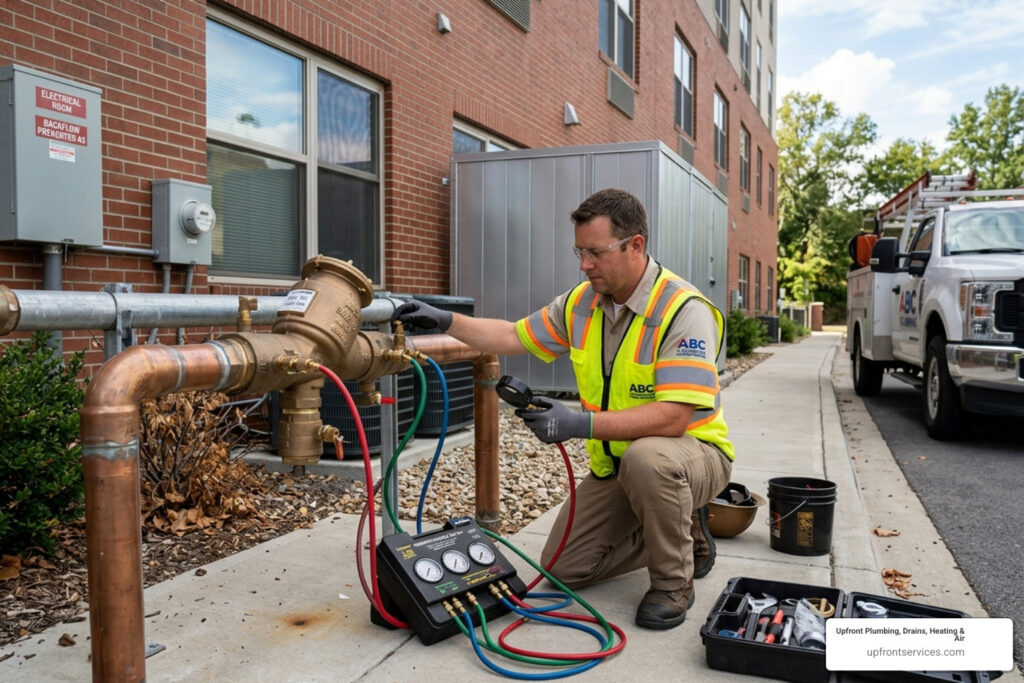
Unpacking Backflow Testing Prices: What to Budget For
What Does Backflow Prevention Testing Cost? Here’s What to Expect
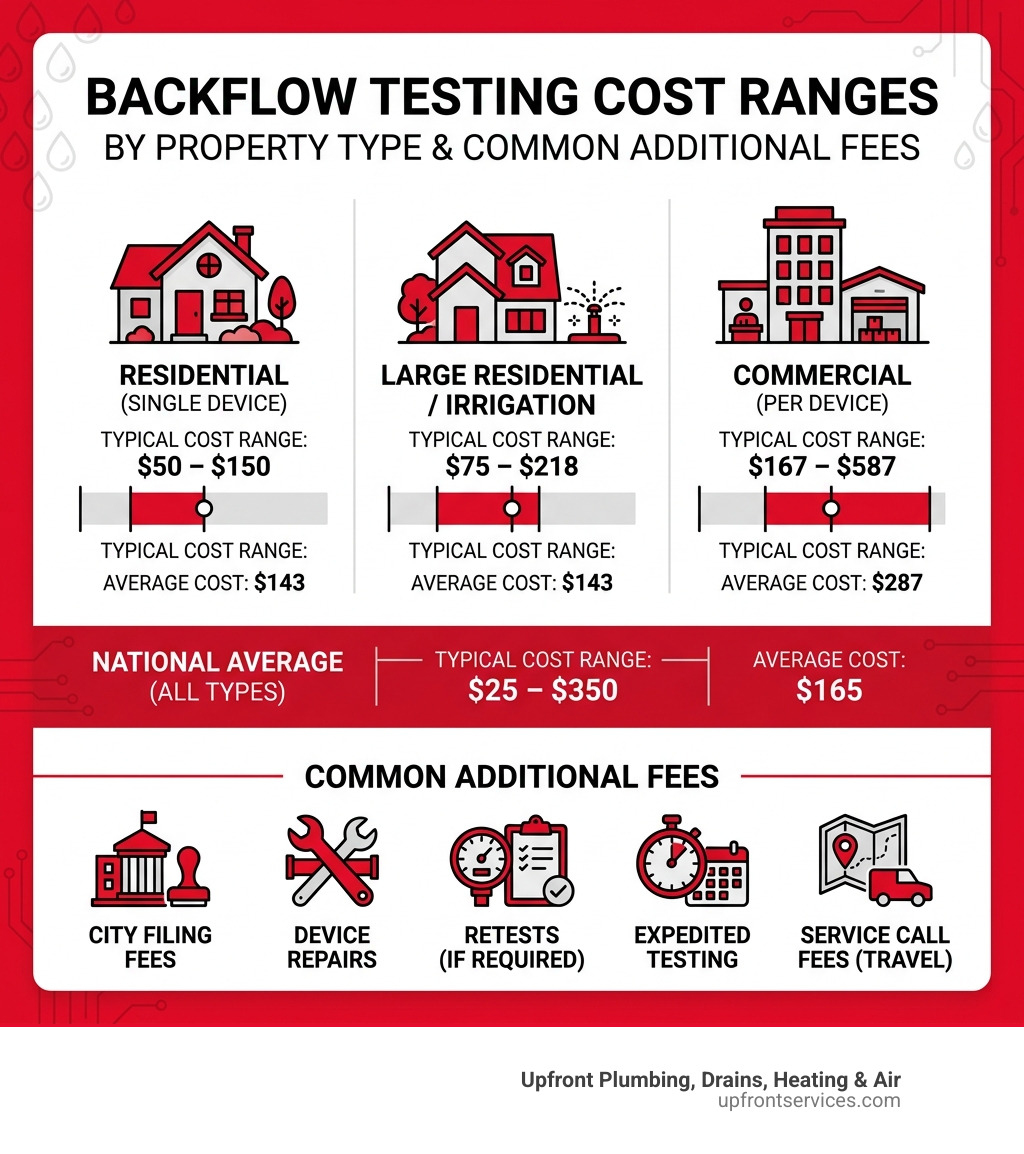
Backflow prevention testing cost typically falls between $50 and $300 per device, depending on where you live, the type of device you have, and whether any repairs are needed.
Here’s a quick snapshot of what most property owners pay:
| Property Type | Typical Cost Range | Average Cost |
|---|---|---|
| Residential (single device) | $50 – $150 | $143 |
| Large residential / irrigation | $75 – $218 | $143 |
| Commercial (per device) | $167 – $587 | $287 |
| National average (all types) | $25 – $350 | $165 |
These numbers cover the test itself. Additional costs — like city filing fees, repairs, or retests — can add to your total. We’ll break all of that down in this guide.
Your water might look clean. But without a working backflow preventer, contaminants like pesticides, fertilizer runoff, and even sewage can silently flow backward into your home’s drinking water.
That’s not a hypothetical. It happens when water pressure drops — during a main line break, for example — and creates a suction effect that pulls non-potable water into the clean supply. Backflow testing exists to make sure the device stopping that from happening is actually doing its job.
For homeowners and business owners in Boise, this isn’t optional. Most local water authorities require annual testing. And if you miss the deadline or your device fails, the costs can climb fast.
Upfront, is a results-oriented management and process improvement specialist with a background in helping businesses and homeowners find cost-effective solutions — including navigating the real-world expenses tied to backflow prevention testing cost. In this guide, I’ll walk you through everything you need to budget for, clearly and without the runaround.
Understanding Backflow Prevention and Why It’s Mandatory
To understand the backflow prevention testing cost, we first have to look at what these devices actually do. In any plumbing system, there are “cross-connections”—points where your clean, potable water connects to something non-potable, like a lawn sprinkler system, a swimming pool, or a boiler.
Under normal conditions, water pressure keeps everything moving in one direction: out of your faucets. However, if a city water main breaks or a fire hydrant is opened down the street, the pressure in the municipal line drops suddenly. This creates a “back-siphoning” effect, essentially turning your pipes into a giant straw that sucks dirty water from your irrigation lines or pool back into the clean drinking water supply.
Because this poses a massive public health risk, water districts throughout Idaho (including Boise, Meridian, and Nampa) mandate the installation and annual testing of backflow assemblies. These mechanical devices use springs and check valves to block that reverse flow. But because they are mechanical, they wear out.
That is why annual testing is required. According to HomeGuide, this testing ensures that internal seals are holding and that the pressure differentials are within safe limits. To keep things legal, these tests must be performed by a certified tester, often holding an ASSE 5110 certification. If you have an irrigation system or fire sprinklers, you are likely on the city’s list for mandatory annual compliance.
Breaking Down the Backflow Prevention Testing Cost
When you receive that notice in the mail from your water purveyor, your first thought is probably, “How much is this going to set me back?” For a standard residential property, the backflow prevention testing cost is relatively predictable, but it scales up quickly for commercial facilities.
Residential vs. Commercial Cost Comparison
| Factor | Residential Estimate | Commercial Estimate |
|---|---|---|
| Base Test Fee | $50 – $150 | $150 – $600+ |
| City Filing Fee | $10 – $35 | $10 – $35 per device |
| Hourly Labor Rate | $75 – $150 | $100 – $200 |
| Average Total | $143 | $287 |
The national average for a backflow test sits around $165, but we often see local residential tests performed for a flat fee between $75 and $125. This usually covers the technician’s time to hook up their specialized pressure gauges and verify the device’s performance.
However, the “sticker price” isn’t always the final price. Many municipalities charge a report submission fee. For example, some cities charge around $12.95 just to process the digital paperwork. If you’re managing a multi-family complex or a small business, you might be looking at multiple devices, which can drive the total project cost into the $300 to $600 range. If you need help with other household plumbing while the tech is there, you can learn more about our general plumbing services to bundle your maintenance.
Key Factors That Influence Your Expenses
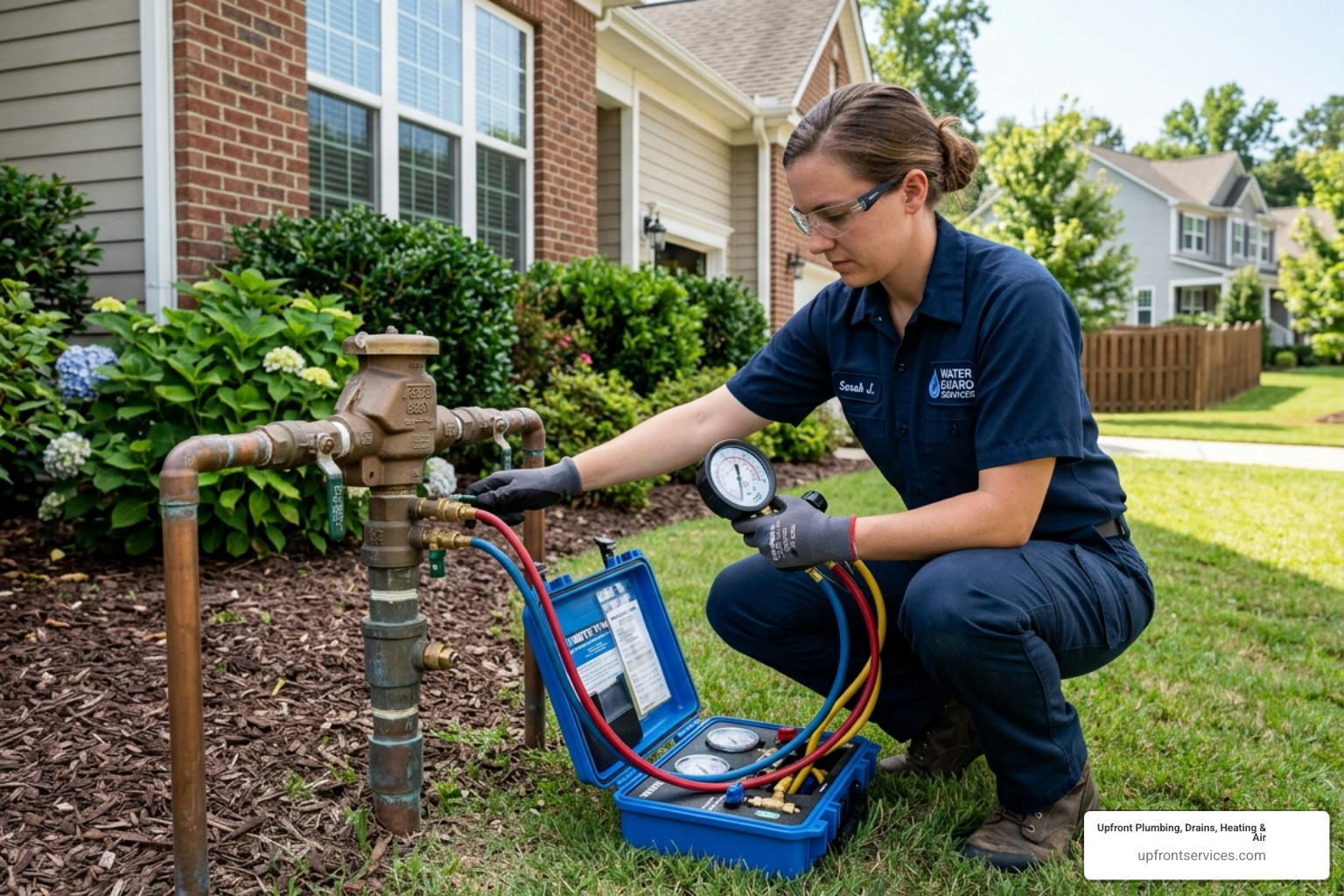
Not every backflow test is created equal. Several variables can push your backflow prevention testing cost toward the higher end of the spectrum.
- Device Accessibility: If your backflow preventer is easy to reach—say, right next to your water meter in the basement or in a standard green box in the yard—the test is fast. But if it’s tucked away in a cramped crawlspace, located in a vaulted underground chamber, or requires rooftop access, expect to pay a premium for the extra time and safety gear required.
- Number of Assemblies: Most homes have one device for the sprinklers. Commercial buildings may have three or more: one for the main service line, one for the fire suppression system, and one for the irrigation.
- Travel Fees: If you live in a more remote part of the major cities and sorrounding areas of Idaho, some contractors may charge a trip fee to cover fuel and travel time.
- Administrative Fees: As mentioned in this Essential Backflow Testing Guide, some testers include the city’s filing fee in their quote, while others add it as a separate line item. Always ask if the filing fee is included!
Impact of Device Type on Backflow Prevention Testing Cost
The type of device you have is usually dictated by your “hazard classification.”
- Pressure Vacuum Breakers (PVB): These are common for residential irrigation. They are generally the cheapest to test and repair.
- Double Check Valve Assemblies (DCVA): Often used for low-hazard applications, these are mid-range in terms of complexity.
- Reduced Pressure Zone (RPZ) Assemblies: These are the “gold standard” for high-hazard protection (like fire lines with chemicals or industrial processes). Because they have more moving parts and a relief valve, the backflow prevention testing cost and repair costs are higher.
How Commercial Requirements Affect Backflow Prevention Testing Cost
Commercial properties face more stringent regulations. An industrial site or a restaurant in Boise represents a higher hazard to the public water supply than a single-family home. Commercial devices are often larger—2 inches to 6 inches in diameter—compared to the 1-inch devices found on most homes. Testing these larger assemblies takes more time and requires heavy-duty testing equipment, leading to an average commercial cost of approximately $287 per device.
What Happens if a Device Fails? Repair vs. Replacement Costs
A backflow test is a pass/fail exam. If your device fails, you generally have a 30-day compliance window to get it fixed. This is where the backflow prevention testing cost can jump from a simple service fee to a major repair bill.
Common Repair Costs
If a device fails, it’s often due to debris in the line or a worn-out rubber seal. A “rebuild” involves taking the device apart and replacing the internal springs and seals using a rebuild kit.
- Rebuild Parts: $30 – $200 depending on the device size.
- Labor for Repair: $150 – $400.
- Average Repair Total: $389.
When Replacement is Necessary
In some cases, especially with older units or those damaged by a harsh Idaho winter, the brass body of the device might be cracked or corroded. If the unit is more than 15 years old, parts might not even be available anymore. At this point, you’re looking at a full replacement.
- New Device Hardware: $150 – $1,000+.
- Installation Labor: $400 – $1,500.
- Average Replacement Total: $1,283.
Freeze damage is the leading cause of replacement in our region. If you didn’t winterize your system properly, the water inside can expand and split the brass. If your pipes are in bad shape overall, you might want to check out more info about repiping to see if a larger system upgrade is more cost-effective. You can also find more detailed pricing on these scenarios in this Backflow Preventer Cost guide.
How to Save Money and Hire the Right Professional
While you can’t skip the test, you can certainly be smart about how you pay for it. Here are a few insider tips to keep your backflow prevention testing cost down:
- Early Scheduling: Don’t wait until the week your report is due. Many companies offer “early bird” rates or better availability if you book 30 days in advance.
- Bundle Services: If you already need a plumber for a water heater inspection or drain cleaning, ask if they can perform the backflow test during the same visit. You’ll save on the trip fee.
- Volume Discounts: If you have neighbors who also need testing, see if a contractor will offer a “neighborhood rate” for doing multiple homes on the same street in one day.
- Maintenance Records: Keep a folder with your device’s serial number, model, and location. This saves the technician time and ensures they bring the right rebuild kit if a repair is needed.
Questions to Ask Your Contractor
Before you hire someone, make sure they are the real deal. Ask:
- Are you licensed and certified as a backflow tester in this city?
- Does your quote include the city’s filing fee?
- If the device fails, do you charge for a retest after the repair?
- Will you handle the paperwork and submission to the water department?
Frequently Asked Questions about Backflow Prevention Testing Cost
What is the average backflow prevention testing cost for a home?
For a typical single-family home in the Boise areas, expect to pay between $75 and $150. This usually covers the testing of one irrigation backflow preventer and the submission of the results to your local water purveyor.
Can I perform backflow testing myself to save money?
No. In almost every jurisdiction, backflow testing must be performed by a certified professional with a calibrated test kit. The city requires a signed report from a licensed tester to clear your property’s compliance status. Attempting to DIY this could result in fines or having your water service shut off.
How often is backflow testing required by law?
In our service areas, testing is required annually. Some “low-hazard” residential systems in specific districts might have longer cycles (up to 7 years), but these are rare exceptions. Always check the notice sent by your water district to confirm your specific deadline.
Conclusion
Managing your backflow prevention testing cost doesn’t have to be a headache. By understanding the factors that influence the price—from device type to accessibility—you can budget accurately and avoid the “sticker shock” of unexpected repairs. This annual checkup isn’t just a regulatory hurdle; it’s the only thing standing between your family’s drinking water and the contaminants in your lawn.
At Upfront Plumbing, Drains, Heating & Air, we believe in honest, upfront pricing. Whether you are in Boise, Meridian, or Caldwell, our team brings over 25 years of experience to every job. We provide quality workmanship and unmatched warranties to ensure your home stays safe and compliant.
Don’t wait for a city late fee or a water shutoff notice. Schedule your professional backflow prevention service with us today!