Pre-Purchase Leak Detection and Plumbing Tips for Smart Buyers
Why a Home Buyer Plumbing Check is Your Best Investment
When you are walking through a beautiful home in Boise or Eagle, it is easy to get distracted by the granite countertops or the spacious backyard. However, what lies behind the walls and beneath the floorboards—the “nervous system” of the house—is what truly determines your future comfort. A home buyer plumbing check is not just a formality; it is your best defense against inheriting a money pit.
A comprehensive plumbing checklist goes beyond a simple visual review. While a general home inspector will look at the basics, a dedicated plumbing evaluation focuses on the health of major systems. According to 2025 data from Angi, the average cost of a home inspection is approximately $343, typically ranging between $296 and $424. This small upfront investment provides strategic leverage during negotiations. If we find that the general plumbing system is failing, you can request seller credits, price adjustments, or a full repair before closing.
Ignoring these systems can lead to hidden liabilities. A slow leak in a crawl space in Nampa might not be visible during a five-minute walkthrough, but it can lead to structural rot and mold over time. By identifying safety hazards early, you protect your earnest money and ensure the property’s condition matches the asking price.
Essential Fixtures and Appliances to Inspect
The fixtures are the parts of the plumbing system you interact with every day. If they aren’t working correctly, your daily routine suffers. During your home buyer plumbing check, you should systematically test every sink, tub, and appliance.

Essential Fixtures in Your Home Buyer Plumbing Check
Don’t be afraid to get your hands a little dirty during a house tour. Here is a quick guide to what we look for:
- The “Wiggle Test”: Sit lightly on the toilets and push against the sinks. If the toilet rocks or the sink moves, it indicates a loose connection or, worse, a rotting subfloor beneath the wax ring.
- Flush Strength: Flush every toilet. We are looking for a strong, quick action. If it gurgles, runs constantly, or fails to clear the bowl, there may be a venting issue or a partial blockage requiring drain cleaning.
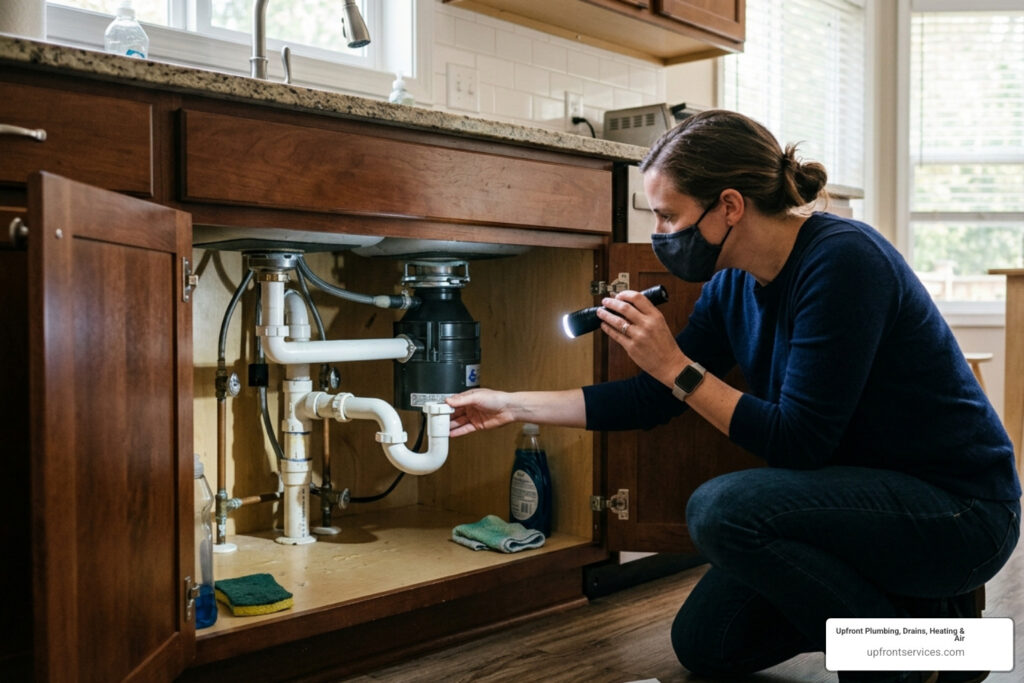
- P-Trap Integrity: Look under every vanity and kitchen sink. Check the P-trap (the U-shaped pipe). It should be free of corrosion, drips, and “creative” DIY taping.
- Mineral Buildup: In areas like Meridian and Caldwell, hard water can lead to significant mineral buildup. Check the aerators on faucets and showerheads for white, crusty deposits that restrict flow.
- The “Sniff Test”: If you smell sulfur or “rotten eggs” near a drain, it’s a sign that the trap has dried out or there is a breach in the sewer vent system. This is a key safety check, much like The Ultimate Guide to Backflow Prevention Inspections, which ensures your clean water stays separate from waste.
Testing Water Pressure and Flow
Low water pressure is one of the most common complaints from new homeowners. To test this properly, perform a “multi-fixture test.” Turn on the kitchen faucet, then go to the bathroom and start the shower. If the shower pressure drops to a trickle, the home may have undersized piping or a faulty pressure regulator.
Standard modern plumbing should feature a 3/4-inch main service line and 1/2-inch lines to individual fixtures. If the home uses older, 1/2-inch main lines, you will likely struggle with pressure for as long as you live there. Also, check for low-flow toilets (manufactured after the late 1990s); these should use less than 1.6 gallons per flush to remain efficient and up to code.
Evaluating Pipes, Pressure, and Main Valves
The type of material used for the home’s piping determines how long the system will last before needing a total repiping. In the Treasure Valley, we see a wide variety of materials depending on the age of the neighborhood.
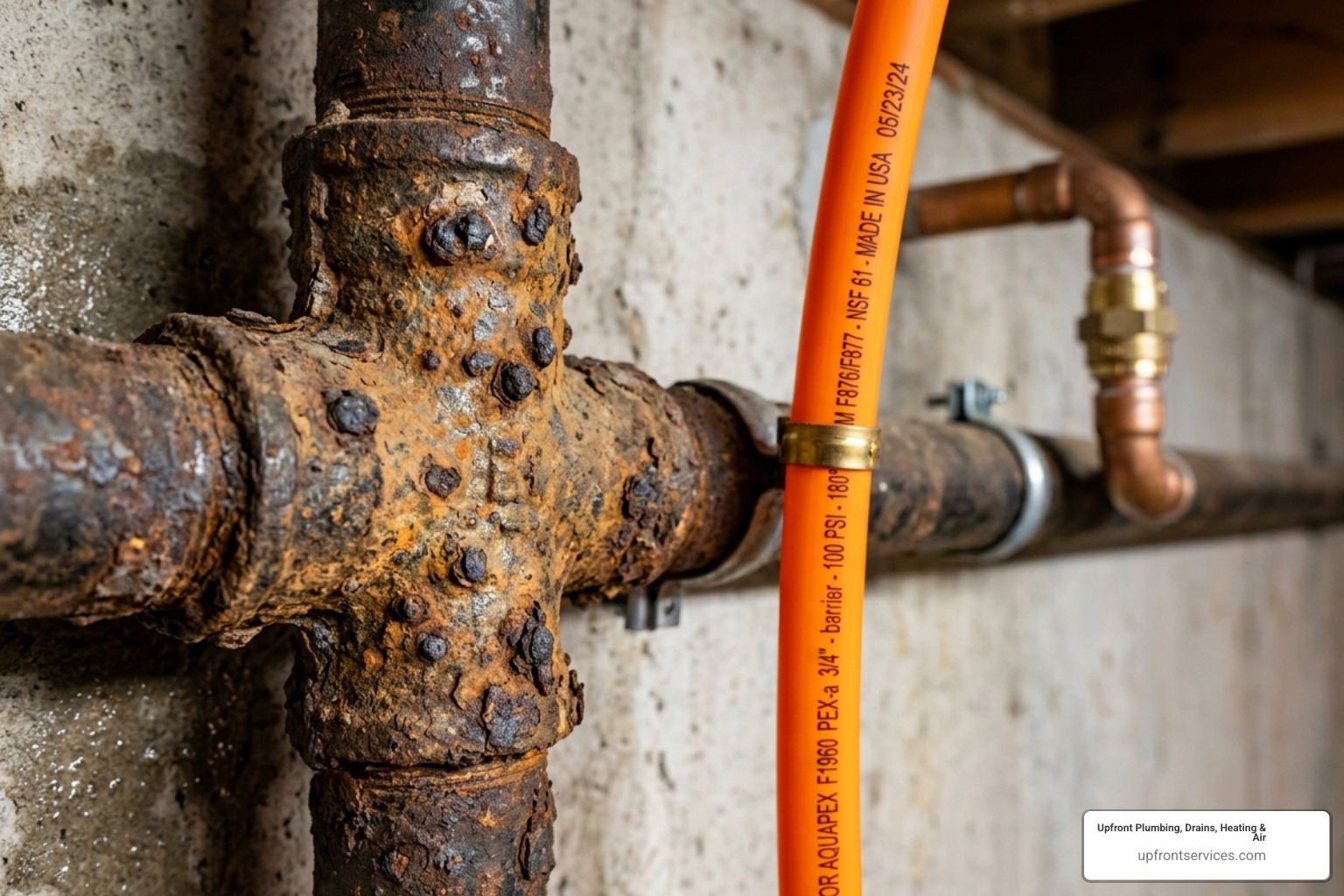
- Galvanized Steel: Common in homes built before the 1960s. These pipes rust from the inside out. If you see silver-colored threaded pipes with rust “pimples,” they likely need replacement. Galvanized pipes generally reach the end of their life after 30 years.
- Copper: The gold standard for many years. It is durable but can be susceptible to “pinhole leaks” if the water chemistry is aggressive.
- PEX and CPVC: Modern, flexible, and resistant to scale. These are standard in new construction in Eagle and Garden City.
- Lead Risks: This is a major safety concern. According to the CDC, one in every six children has an above-average amount of lead in their blood. If the home has lead service lines or lead solder, it is a significant health hazard that must be addressed immediately.
- Polybutylene: If you see grey plastic pipes, be careful. This material was used in the 80s and 90s and is notorious for sudden, catastrophic failure, often leading to insurance companies refusing coverage.
Finally, locate the main shut-off valve. It is usually in the basement, crawl space, or near the water meter. Every buyer should know where this is and test it to ensure it actually turns. In an emergency, a seized main valve can mean the difference between a small mop-up and a total home flood.
Deep Dive: Water Heaters and Sewer Line Red Flags
Two of the most expensive plumbing items are the water heater and the main sewer line. A standard water heater typically lasts 8 to 12 years, though well-maintained units in areas with high water quality can last up to 15 or 18 years.
When inspecting the water heater, look for the manufacture date on the tank’s label. If the unit is over 10 years old, factor the cost of replacement into your offer. Look for rust at the base, soot marks (on gas units), or leaking from the Temperature and Pressure (T&P) relief valve. Modern codes also require expansion tanks—small tanks sitting above the main heater—to handle thermal expansion. If one is missing, it can void the manufacturer’s warranty.
Sewer lines are even more critical. Since they are buried, they are “out of sight, out of mind” until sewage backs up into your new basement. Common red flags include:
- Large trees in the front yard (roots love sewer pipes).
- Soggy patches in the grass when it hasn’t rained.
- Gurgling sounds when the toilet flushes or the laundry drains.
If a home is older than 40 years, we strongly recommend a sewer repair assessment or a full sewer replacement if the pipes are made of outdated clay or Orangeburg material.
Advanced Tools for a Home Buyer Plumbing Check
Sometimes a visual check isn’t enough. For total peace of mind, professional plumbers use advanced diagnostics:
- Sewer Scope/Camera Inspection: We run a waterproof camera through the main line to check for cracks, collapses, or root intrusion. This is the only way to know the true state of the underground pipes.
- Thermal Imaging: This helps us find “hot spots” behind walls that indicate a hot water leak without tearing down the drywall.
- Acoustic Detection: We use sensitive microphones to “listen” for the sound of pressurized water escaping from pipes under concrete slabs.
- Moisture Meters: These tools detect dampness in floors and walls that might not be visible to the naked eye, helping identify the need for drain repair before mold takes hold.
The Financial Side: Costs, Contingencies, and Negotiations
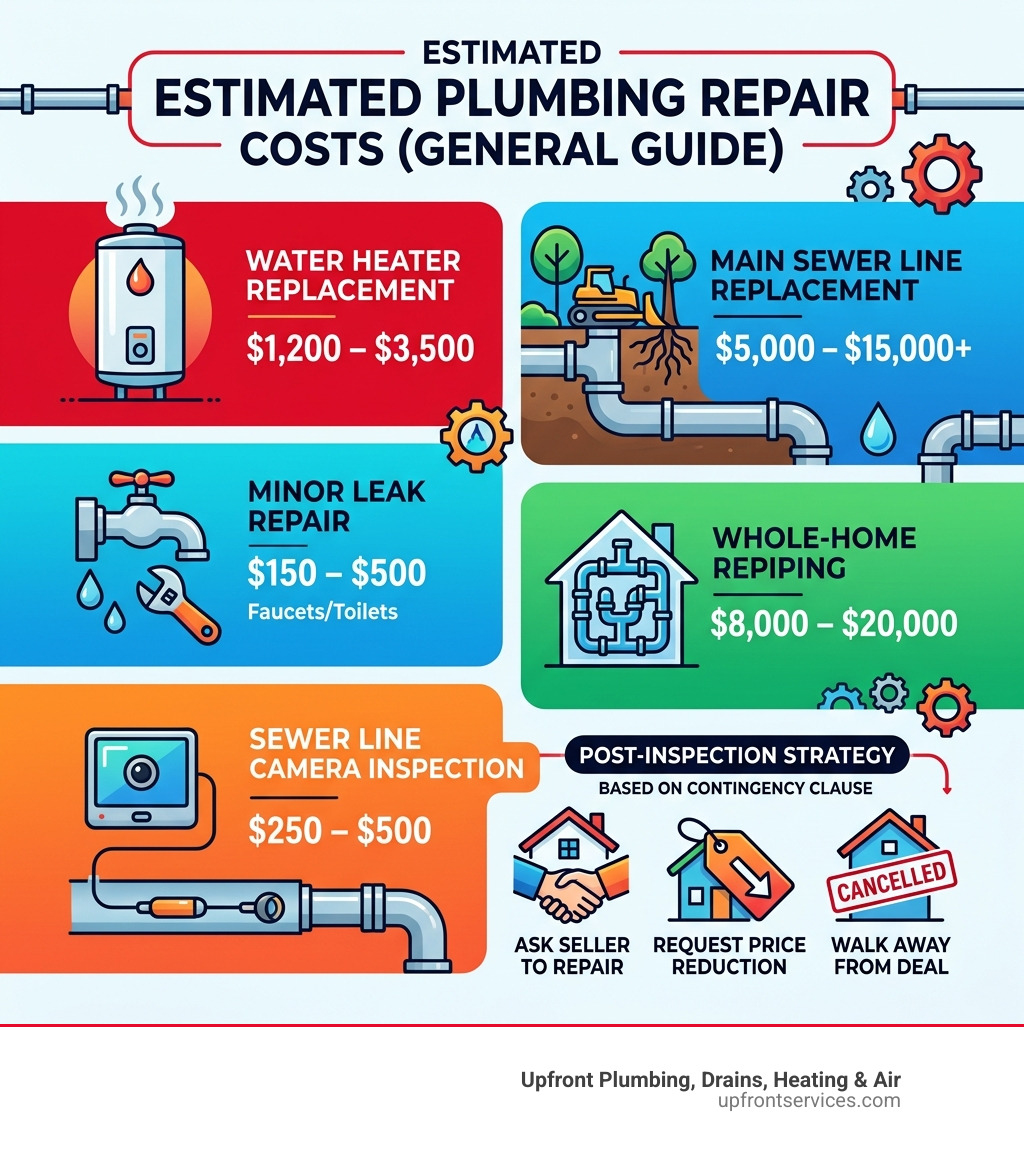
Understanding the potential costs of repairs allows you to negotiate with confidence. Use the table below as a general guide for common plumbing expenses you might encounter after a home buyer plumbing check.
| Plumbing Issue | Estimated Repair/Replacement Cost |
|---|---|
| Water Heater Replacement | $1,200 – $3,500 |
| Main Sewer Line Replacement | $5,000 – $15,000+ |
| Minor Leak Repair (Faucets/Toilets) | $150 – $500 |
| Whole-Home Repiping | $8,000 – $20,000 |
| Sewer Line Camera Inspection | $250 – $500 |
The Power of the Contingency Clause
A home inspection contingency is your “get out of jail free” card. This clause in your purchase agreement states that the sale is dependent on a satisfactory inspection. If the home buyer plumbing check reveals a $10,000 sewer issue, the contingency allows you to:
- Ask the seller to fix the issue before closing.
- Request a price reduction so you can fix it yourself.
- Walk away from the deal with your earnest money intact.
Never waive your inspection contingency, especially in older Idaho neighborhoods where plumbing systems may be decades past their prime.
Frequently Asked Questions about Plumbing Inspections
Who typically pays for the home inspection and how much does it cost?
The buyer almost always pays for the inspection. Think of it as an insurance policy. While the average cost is around $343, specialized plumbing checks like a sewer scope may cost an additional $200 to $400. This is a small price to pay to avoid a $15,000 surprise later.
How long does a plumbing inspection take and when do I get the report?
A standard home inspection takes 2 to 4 hours. A dedicated plumbing inspection usually takes about 1 to 2 hours. Most professional companies will provide a digital report with photos and recommendations within 24 to 48 hours.
What are the most common plumbing deal-breakers in older homes?
The most common “deal-breakers” are collapsed sewer lines, lead piping, and widespread polybutylene or failing galvanized pipes. These issues often require major construction and can cost tens of thousands of dollars, making them significant points of negotiation.
Conclusion
Buying a home is one of the biggest financial decisions you will ever make. Don’t let a “pretty” house hide a plumbing nightmare. By performing a thorough home buyer plumbing check, you protect your family’s health and your financial future.
At Upfront Plumbing, Drains, Heating & Air, we have over 25 years of experience. Now serving the Boise, Meridian, Nampa, Caldwell, Eagle, and Garden City areas. We pride ourselves on honest, upfront pricing, quality work, and unmatched warranties. Whether you need a simple walkthrough or a high-tech sewer scope, we are here to ensure your new home is a solid investment.
Ready to move forward with confidence? Schedule a professional plumbing inspection in Meridian or any of our Idaho service locations today!