Top Leak Detectors to Save Your Basement from a Water Heater Disaster
A Leaking Water Heater Can Cost You Thousands — Here’s What to Do About It
Water heater leak detection is one of the most effective ways to protect your home from costly, preventable damage. If you want a fast answer, here’s what you need to know:
Quick Answer: Water Heater Leak Detection at a Glance
| What You Need | Best For | Typical Cost |
|---|---|---|
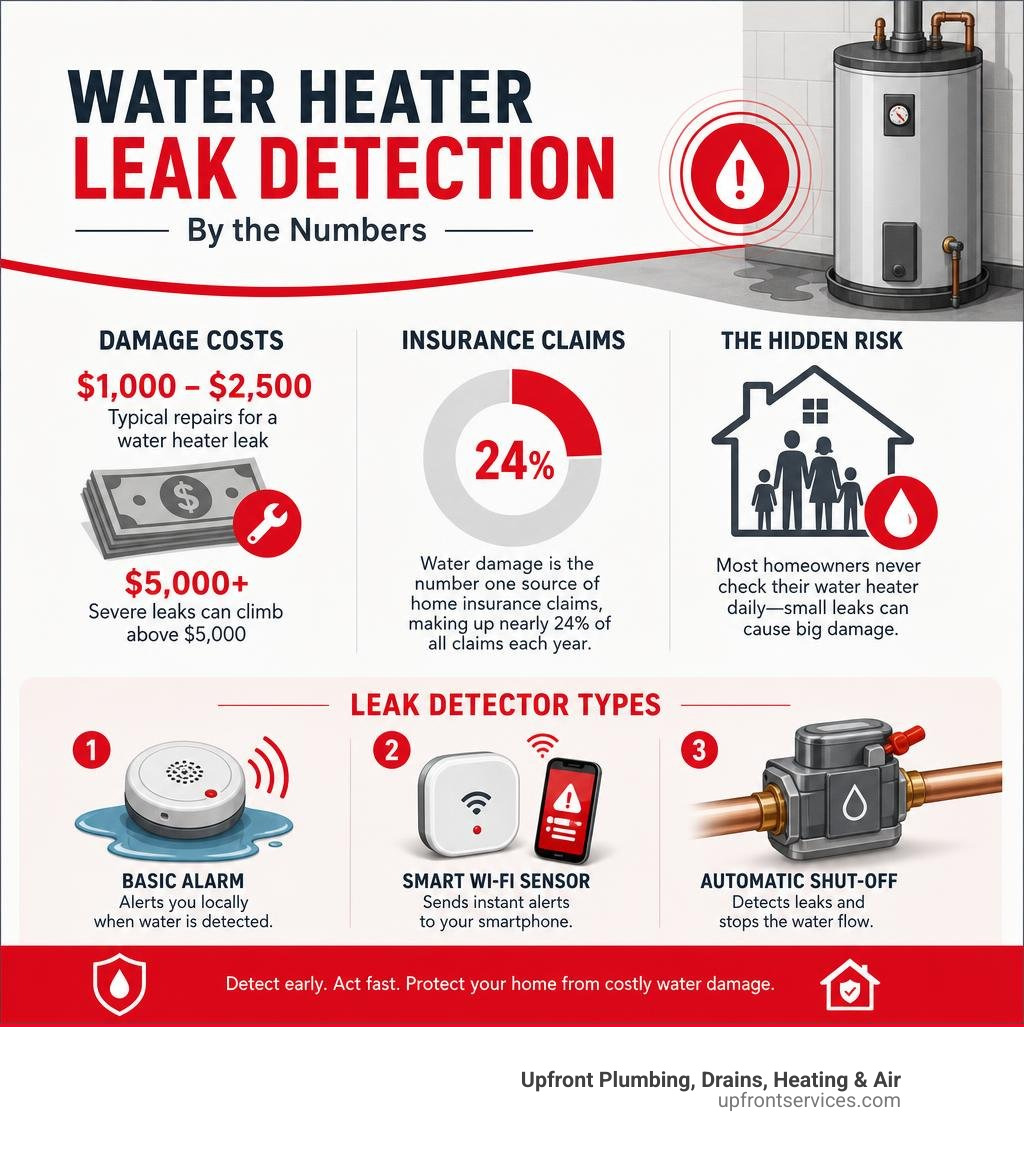
| Basic battery alarm | Budget protection, simple alert | $10–$60 |
| Smart Wi-Fi sensor | Remote alerts, smartphone monitoring | $18–$130 |
| Automatic shut-off system | Full protection, stops water flow instantly | $400–$900 |
Water damage is the number one source of home insurance claims, making up nearly 24% of all claims each year. A leaking water heater alone can cost anywhere from $1,000 to $2,500 in repairs — and serious cases can climb above $5,000. Most homeowners never check their water heater daily, which means a slow drip can quietly cause major damage before anyone notices.
For Idaho homeowners in Boise, Meridian, and nearby cities, this is a real concern. A basement or utility room flood can happen while you’re at work, on vacation, or simply asleep — and by the time you find it, the damage is already done.
At Upfront, our background in results-driven solutions and process improvement has given us a clear view of how the right water heater leak detection system can save homeowners from expensive, stressful repairs. In this guide, we’ll walk you through the best detectors available so you can choose the right protection for your home.
Water heater leak detection vocab explained:
Why Water Heater Leak Detection is Crucial for Idaho Homeowners
When we think about home maintenance in the Boise area, we often focus on winterizing our pipes or tuning up our air conditioners. However, your water heater is a silent workhorse that operates under constant pressure and high temperatures. Over time, this takes a toll.
Without a dedicated water heater leak detection system, a small drip can quickly escalate into a catastrophic failure. Traditional storage tank water heaters typically have a lifespan of 10 to 12 years. As they age, several internal and external factors can cause them to leak:
- Tank Corrosion: The inside of a steel water heater tank is constantly exposed to water. To prevent rust, manufacturers install an anode rod, which attracts corrosive elements. However, anode rods must be replaced every 3 to 4 years. When the anode rod is depleted, the corrosive elements attack the steel tank lining instead, eventually eating through the metal and causing a permanent, unrepairable leak.
- Temperature and Pressure (T&P) Valve Failures: The T&P valve is a critical safety feature designed to release water if the internal pressure or temperature gets too high. If this valve becomes faulty or clogged with mineral scale, it may begin to drip constantly or, in worst-case scenarios, fail to relieve pressure entirely.
- Drain Valve Leaks: Made of plastic or brass, the drain valve at the bottom of the tank is used for annual flushing. Over time, the seals inside this valve can degrade, leading to a persistent drip.
- Thermal Expansion: As water heats up, it expands. If your home has a closed plumbing system, this expansion increases the pressure on your tank, creating tiny fractures in the metal that grow larger over time.

If you are buying a home or planning an upgrade, reviewing resources like Pre-Purchase Leak Detection and Plumbing Tips for Smart Buyers can help you identify these hidden vulnerabilities before they turn into a flooded basement.
In places like Boise, Meridian, Nampa, Caldwell, Eagle, and Garden City, our local water chemistry can accelerate mineral buildup. This makes routine inspections and early detection systems absolutely essential to safeguard your property.
Types of Water Heater Leak Detectors
Not all leak detection systems are built the same. Depending on your budget, smart home preferences, and plumbing configuration, you can choose from three main categories of protection.
| Detector Type | How It Works | Key Benefits | Best For |
|---|---|---|---|
| Spot Sensors (Basic) | Placed on the floor; sounds a loud, local siren when metal contacts touch water. | Low cost, easy DIY setup, reusable. | Homeowners on a budget who are frequently near the utility closet. |
| Smart Wi-Fi Sensors | Sits on the floor; sends instant smartphone alerts and sounds an alarm when water is detected. | Remote monitoring, integrates with smart home systems, tracks temperature. | Renters, frequent travelers, and those with finished basements. |
| Automatic Shut-Off Systems | Sensor triggers an electronic motorized valve to shut off the cold water supply instantly. | Prevents flooding entirely, reduces water damage costs by up to 93%. | Maximum peace of mind, vacation homes, and high-risk setups. |
Understanding these options helps you decide whether you need a simple alarm to wake you up at night or an advanced system that steps in to save the day while you are away from home.
Basic Battery-Operated Alarms for Water Heater Leak Detection
If you want a straightforward, economical way to monitor your water heater, a basic battery-operated spot detector is an excellent starting point. These devices do not require Wi-Fi, smart hubs, or complex wiring. You simply place them on the floor or in the safety pan underneath your water heater.
These units feature small metal contacts on the bottom. When water pools and touches these contacts, it completes an electrical circuit, instantly triggering a loud, high-decibel audible alarm (usually around 85 to 95 decibels—loud enough to hear through closed doors or from another floor).
A top-rated choice in this category is the Resideo Water Heater and Sump Pump Re-Useable Water Leak Detector with Alarm. This low-cost device is incredibly reliable and completely reusable. Once it detects water and sounds the alarm, you simply pick it up, dry off the metal contacts, and place it right back into service. It is a highly effective, budget-friendly “set-it-and-forget-it” tool for local spot detection.
Smart Wi-Fi Systems for Water Heater Leak Detection
While loud local alarms are great when you are home, they won’t help if you are working in Boise, shopping in Meridian, or vacationing out of state. That is where smart Wi-Fi water leak detectors shine. These devices connect directly to your home’s wireless network to send instant push notifications, text messages, or emails to your smartphone the second a drip is detected.
Several excellent smart systems are available on the market in 2026:
- SwitchBot Water Leak Detector: Available in multiple configurations, including the popular SwitchBot Water Leak Detector | Wi-Fi Smart Home Water Sensor | SwitchBot US (and the SwitchBot Water Leak Detector | Prevent Water Damage with Remote Monitoring | SwitchBot EU for international standards), this device is highly versatile. It features an IP67 waterproof rating, a battery life of up to 2 years, and does not require a separate smart hub to connect to your Wi-Fi. It detects dripping water, full immersion, and rising water levels.
- La Crosse Technology Leak Geek: The Leak Geek Wi-Fi Alert System | Wireless Leak Sensor | La Crosse Technology uses a low-profile spot sensor that communicates via a 915MHz radio signal to a plug-in Wi-Fi gateway. This design allows for an impressive 400-foot transmission range, making it ideal for deep basements or detached utility closets where standard Wi-Fi signals struggle to reach.
- StreamLabs Scout: The StreamLabs Scout – StreamLabsWater is a premium point-of-leak detector that monitors both water leaks and ambient temperature to warn you of freezing conditions. It can be used as a standalone smart sensor or paired with a whole-home shut-off valve for automated defense.
These smart sensors give you the power of remote monitoring, ensuring you are always in the loop, no matter where you are.
Key Features to Look For and Optimal Sensor Placement
When choosing a water heater leak detection system, keep these essential features in mind:
- Battery Life and Alerts: Look for sensors with a battery life of at least 1 to 3 years. The accompanying mobile app should send low-battery alerts so you are never left unprotected.
- Smart Home Integration: Ensure the device works with your existing smart home ecosystem (such as Apple Home, Google Home, Amazon Alexa, or Home Assistant) to trigger automated routines, like flashing smart lights red when a leak is detected.
- Sensor Design: Rope sensors or flat spot sensors with anti-slip feet are best for placing directly under or around water heater tanks.
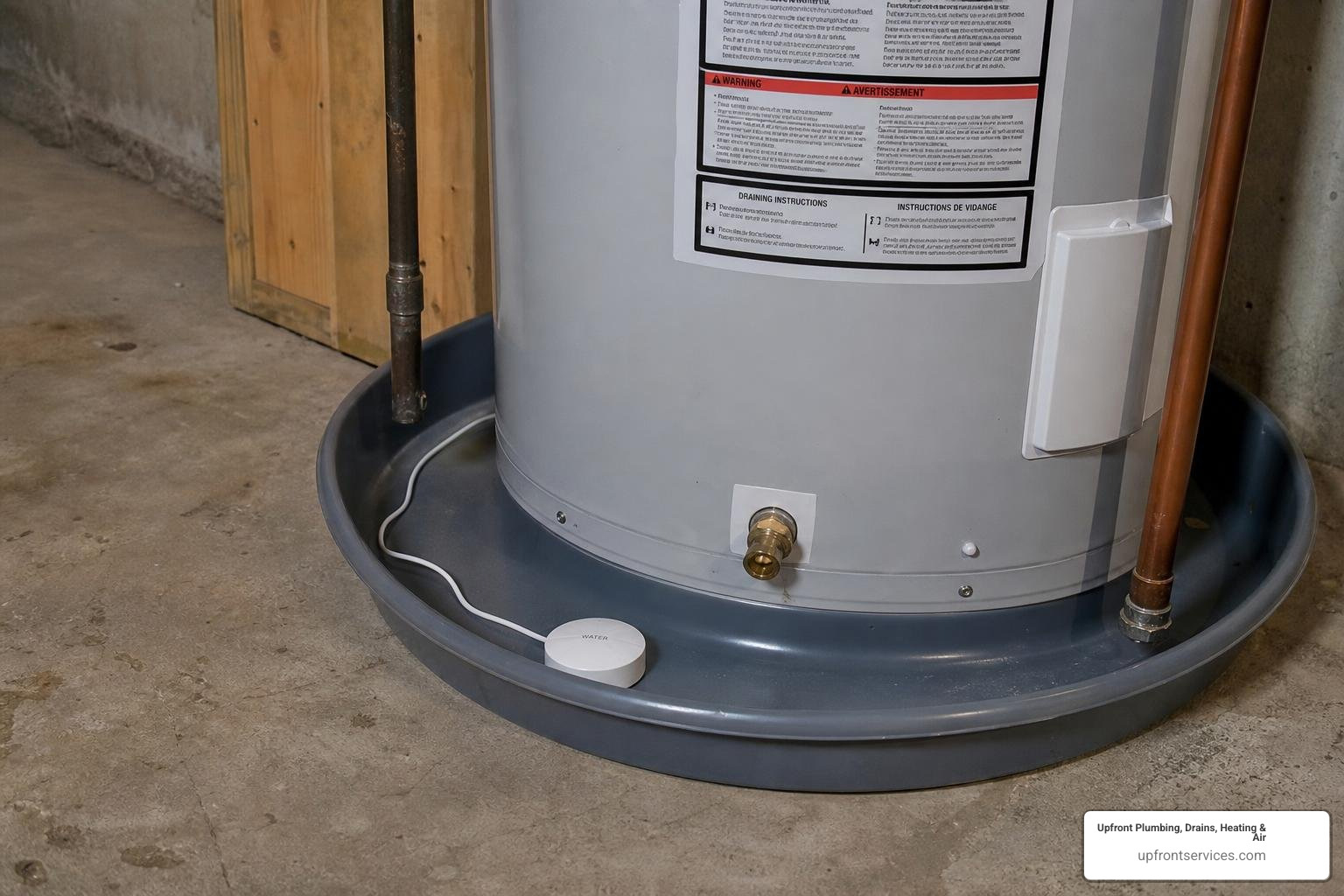
Where to Place Your Sensors for Maximum Protection
To catch a leak before it spreads across your entire basement, placement is everything. Water follows the path of least resistance, so you must position your sensors strategically:
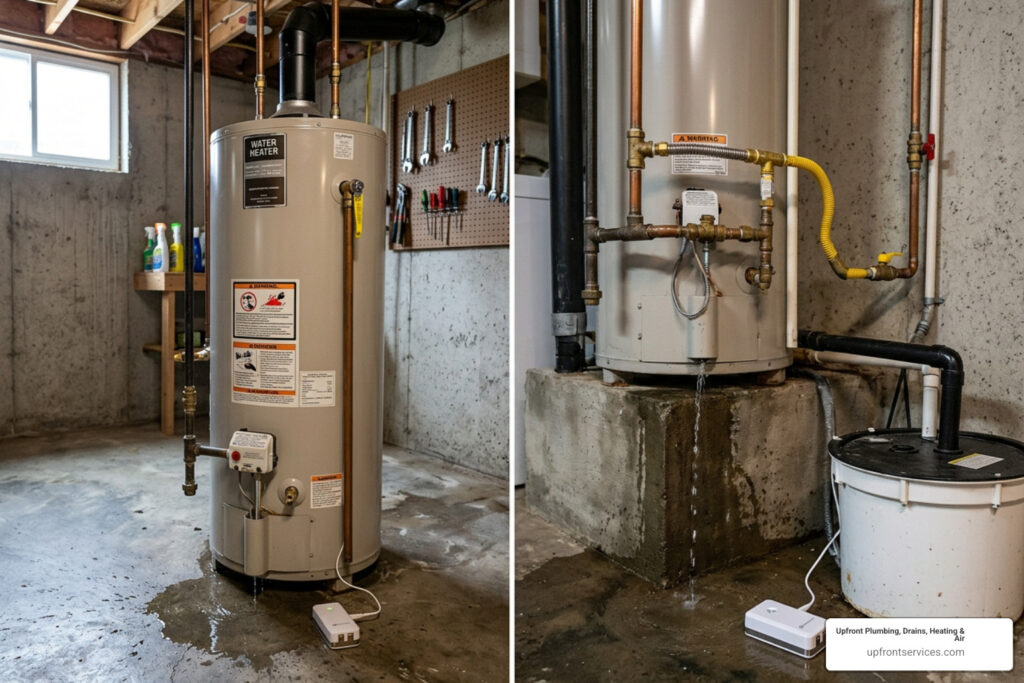
- Inside the Drain Pan: If your water heater is installed inside a metal or plastic safety drain pan, place the sensor directly inside the pan, right next to the tank.
- At the Lowest Point of the Floor: If you don’t have a drain pan, locate the natural slope of your concrete floor and place the sensor at the lowest point where water is most likely to pool first.
- Near Key Connections: Position sensors near the cold water inlet, the hot water outlet, and directly beneath the T&P discharge pipe.
- Adjacent Equipment: Keep other water-using equipment in mind. For example, if you have an HVAC system nearby, check out The Boise Guide to Fixing Leaky Condensate Pumps to understand how multiple utility lines can interact and where sensors should overlap for complete utility room coverage.
Automatic Shut-Off Valves and Flood Prevention
While smart sensors are fantastic for alerting you to a problem, they still require human intervention to turn off the water. If a major pipe connection bursts, hundreds of gallons of water can flood your home in a matter of minutes.
To achieve the ultimate level of home protection, you should pair your leak sensors with an automatic shut-off valve. These systems feature an motorized brass ball valve installed directly onto the cold water incoming feed line of your water heater.
When a paired sensor detects water, it transmits a signal to the control unit, which automatically closes the motorized valve in under 45 seconds. This limits the potential leak to only the water already sitting inside the tank (usually 40 to 50 gallons), rather than allowing the municipal water supply to continuously pump thousands of gallons into your home.
A prime example of this technology is the FloodStop system. Homeowners and professional plumbers frequently refer to the FloodStop Installation Guide to set up these robust, code-compliant systems. Installing an automatic water shut-off system can reduce water damage costs by up to 93%, making it one of the smartest investments you can make for your property.
Frequently Asked Questions about Water Heater Leaks
We hear many questions from homeowners in Nampa, Caldwell, and Eagle about managing water heater health. Here are some of the most common queries we address:
What are the most common causes of water heater leaks?
The most frequent culprits are internal tank corrosion due to an expired anode rod, loose or degraded drain valves, and failing T&P valves. Additionally, improper installation can lead to premature joint failure. If you are planning a new system or want to make sure your current setup is safe, you can read our step-by-step overview in Mastering Gas Water Heater Handbook to see how proper venting, piping, and expansion tanks prevent leaks from developing in the first place.
How much do water heater leak detection systems cost?
The cost depends entirely on the level of sophistication you choose:
- Basic Alarms: $10 to $60 per sensor.
- Smart Wi-Fi Sensors: $18 to $130 per sensor.
- Automatic Shut-Off Systems: $400 to $900 for the hardware, plus professional plumbing installation labor.
That many home insurance carriers offer premium discounts or deductible credits if you have a professionally installed automatic shut-off system active in your home, which helps offset the initial installation cost over time.
Can a smart leak detector integrate with my existing smart home?
Yes! Most modern Wi-Fi leak detectors (like SwitchBot or StreamLabs) integrate seamlessly with major smart hubs. You can configure your smart home app to run automated routines, such as shutting off your smart well pump, turning off the water heater’s power circuit, or sending emergency text alerts to family members and your local plumber the moment water is detected.
Conclusion
Investing in a reliable water heater leak detection system is one of the simplest, most cost-effective ways to protect your Idaho home from devastating water damage. Whether you choose a basic local alarm, a smart Wi-Fi sensor, or a fully automated shut-off valve, you are taking a crucial step toward long-term peace of mind.
At Upfront Plumbing, Drains, Heating & Air, we have spent over 25 years helping homeowners in Boise, Meridian, Nampa, Caldwell, Eagle, and Garden City keep their plumbing systems running safely and efficiently. We pride ourselves on honest, upfront pricing, high-quality workmanship, and unmatched warranties.
If you are concerned about the age of your current water heater, check out our Buyers Guide Best Water Heaters for 2026 or explore our comprehensive Hot Water Now with Top Boise Water Heater Services to learn how we can help.
Ready to secure your home against water disasters? Schedule Professional Water Heater Services with the Upfront team today for expert sensor installation, system maintenance, or water heater upgrades!